
Container yards are under growing pressure to reduce their environmental impact. Rising fuel costs, tighter ESG requirements and changing customer expectations push operators to rethink how they plan moves, deploy equipment and manage trucks at the gate. A well-configured Container Yard Management System (CYMS) helps turn this pressure into measurable results: fewer unnecessary moves, less idle time and lower emissions across the yard.
The Link Between Yard Operations and Emissions
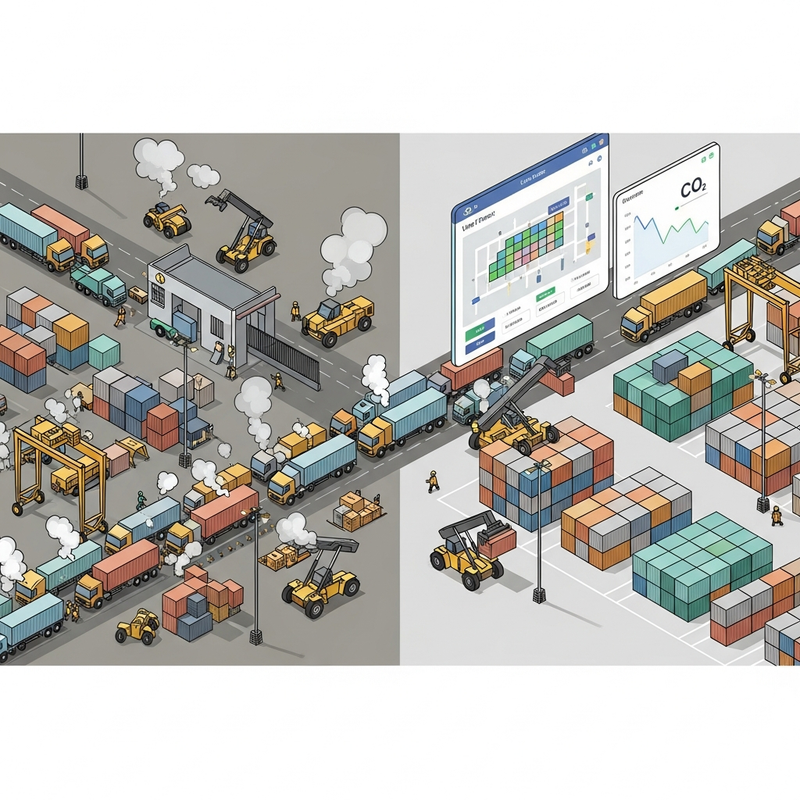
A large part of CO₂ emissions in container yards comes from avoidable inefficiencies. Trucks standing in queues, yard equipment idling with engines on and repeated re-handling all waste fuel. Every poorly planned trip leaves a carbon footprint. Without digital support, many depots repeat the same patterns every day, scaling up both environmental impact and operating costs.
Smart Yard Tools that Cut Fuel Use
A modern CYMS brings time slotting, predictive yard planning and optimized move scheduling into one platform. Together, these tools reduce unnecessary trips by guiding reach stackers, terminal tractors and other equipment along efficient routes. Idle time falls, containers are placed in the right storage block the first time and gate traffic becomes smoother and easier to control. In KPIs this shows up as lower diesel consumption, fewer engine hours and a clear reduction in CO₂ emissions.
Impact on Daily Yard Operations
The difference between a manual yard and a yard running on a management system is obvious in day-to-day work. Dispatchers make fewer calls, drivers spend less time waiting at the gate and equipment moves are based on live data instead of guesswork.
| Metric | Without Digital Yard System | With CYMS |
|---|---|---|
| Fuel Consumption per Day | 100% | –25% to –35% |
| Average Idle Time | Up to 3 hours | Less than 1 hour |
| CO₂ Emissions | Baseline | Reduced by 20–30% |
For a depot handling a few hundred gate moves per day, even a 20% cut in unnecessary driving can free several hours of equipment time and reduce fuel costs in a way that is clearly visible in monthly reports.
CO₂ Reduction as Part of Business Strategy
Reducing emissions is no longer just a compliance task. For terminal owners, fuel savings go straight into operating margin. At the same time, cleaner yard processes strengthen the company’s position with shipping lines, forwarders and beneficial cargo owners that prioritise sustainability.
With a CYMS in place, management gains clear, exportable reports that support ESG audits and show real progress, for example:
- tracking CO₂ per move, per TEU or per truck visit,
- comparing diesel usage before and after digitalisation,
- showing how fewer re-handles extend equipment lifetime.
Integration with Broader Systems
A yard management system delivers the strongest effect when it is integrated with CTMS, ERP and billing. This creates a single view of yard operations and commercial performance. Each eco-focused initiative can then be linked to financial and operational KPIs on the same dashboard. Fewer yard moves mean lower handling costs and lower CO₂ emissions, while accurate timestamps and status updates support green reporting for customers.
Learn more about CYMS capabilities in dedicated container yard software.
Global Perspective
Smarter yard management is becoming a global standard. Case studies from inland depots and terminal operators show that digital yard solutions can cut unnecessary driving by up to 30%, reducing CO₂ emissions as well as noise around the facility. In Europe, many sustainability programmes are directly tied to digitalisation, where CYMS and CTOS platforms play a central role in meeting climate targets.
One report notes that optimised yard traffic flow helps logistics companies accelerate their emission reduction strategies and align with international climate goals (Logistics Business).
Real Feedback from Terminals
Terminals that move to CYMS-based workflows often see measurable changes within a few months. Yard teams spend less time correcting wrong placements, fuel bills shrink and equipment lasts longer thanks to fewer idle hours and fewer unnecessary moves. Visibility improves as well: dispatchers work with a live yard map, drivers follow digital instructions and managers monitor performance in real time.
Why CYMS Is Becoming the New Yard Standard
Smart CYMS platforms are no longer just “nice-to-have” tools. They give container yards a practical way to cut fuel waste, reduce idle time and align day-to-day operations with sustainability targets. Terminals that adopt digital yard management gain a cleaner footprint, more predictable KPIs and a stronger position with customers that expect transparent, low-carbon logistics. For operators planning the next stage of growth, running the yard without a digital system is quickly becoming the exception, not the rule.